top of page

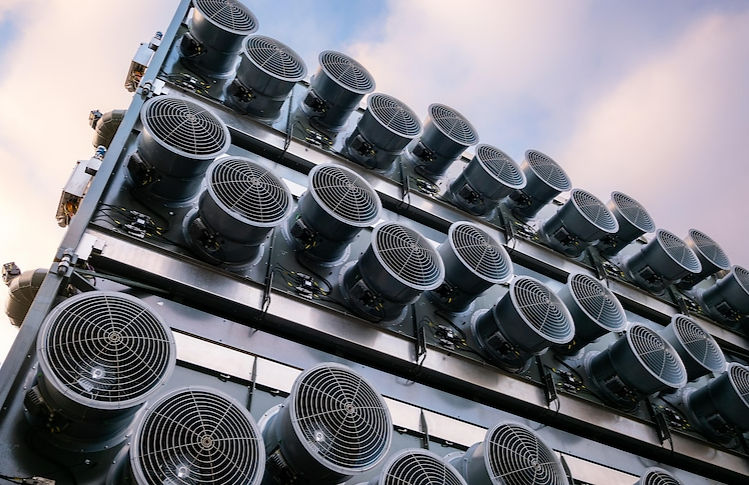
Direct Air Capture


Justifying your carbon management claims – lessons from Australia’s Federal Court
In February 2026, the Federal Court of Australia in Australasian Centre for Corporate Responsibility (ACCR) v Santos, dismissed multiple claims against Santos Limited, a major Australian energy company, concerning the veracity of its carbon management projections.
-
Mar 92 min read


Smart policy can help the UK move beyond a zero-sum choice on energy
So how does Mr Miliband square this circle?
It is hard to argue that Britain is not doing its bit on climate. It has been the fastest-decarbonising major economy. Its latest submission under the Paris Agreement is one of the few that puts the economy on-track for a net-zero carbon world.
-
Feb 124 min read


How UAE's decarbonisation road map can help solve the big carbon conundra
Cop28 ended in achievement and relief, tinged with some disappointments. The final text twice mentions “hard-to-abate” sectors, usually considered to include vital but carbon-intensive heavy industries such as steel, cement and aluminium.
-
Feb 124 min read


AI can help deliver the cleaner and cheaper energy needed for the future
A limited amount of carbon capture, hydrogen and nuclear power are used in the “hard-to-abate” sectors, such as heavy industry, for long-duration reliable electricity supply, and to supply chemical fuels for long-distance shipping and aviation.
-
Feb 124 min read


Energy industry needs to do much more to meet climate targets
Adnoc has reported that it emitted 24 million tonnes from its upstream operations last year. It aims to reduce operational intensity – emissions per barrel of oil or cubic foot of gas – by 25 per cent by 2030, from what is already one of the lowest levels globally.
-
Feb 124 min read


How direct air capture can help countries tackle climate change
Iceland’s famous Blue Lagoon, where tourists boil lobster-red in the volcanic waters, is more than a sightseeing curiosity. The attraction, which is the world’s first geothermal power and district heating plant, is a pioneer of low-carbon energy.
-
Feb 124 min read


Over-reliance on land for carbon dioxide removal in net-zero climate pledges
Achieving net-zero climate targets requires some level of carbon dioxide removal. Current assessments focus on tonnes of CO2 removed, without specifying what form these removals will take. Here, we show that countries’ climate pledges require approximately 1 (0.9–1.1) billion ha of land for removals.
-
Feb 121 min read


The European Green Deal. Upsides and Downsides.
The European Green Deal (EGD), introduced by the European Commission in 2019, stands as a monumental initiative in Europe’s journey toward a more sustainable future.
-
Feb 105 min read


Carbon Footprint Reduction Strategies for Businesses
In today's rapidly changing world, it has become more crucial than ever for businesses to take steps towards reducing their carbon footprint. By implementing sustainable practices, companies can not only lessen their impact on the environment but also benefit their bottom line in the long run. Here are some effective strategies that businesses can adopt to minimize their carbon footprint: Energy Efficiency: One of the most impactful ways for a business to reduce its carbon fo
-
Oct 12, 20252 min read


Engage with Carbon Management: Tips for Environmental Advocacy
In today’s world, the importance of carbon management and environmental advocacy cannot be overstated. As we aim to build a sustainable future for our planet, it is essential for individuals and organizations to engage with carbon management practices. Whether you’re a seasoned environmental advocate or just starting on your journey, here are some tips to help you make a positive impact.
-
Oct 12, 20252 min read


Hydrogen, CCS and nuclear technologies: why There Is No Alternative
TINA is not just a name: it is a slogan and an investment strategy. There Is No Alternative (TINA) is a guide when the options before us look unappetising but necessary. And the same applies to energy technologies, particularly the unloved quartet of nuclear power, carbon capture and storage (CCS), carbon dioxide removal, and hydrogen.
-
Jun 11, 20254 min read


Carbon capture is becoming big business, here is how
ExxonMobil says carbon capture, use and storage (CCUS) will be a $4 trillion market by 2050. Most reputable climate analysts find CCUS is essential to meeting our climate targets. Environmental groups, with a few honourable exceptions, loathe it. But perhaps the most important question is – can it make money, and how much?
-
Jul 16, 20245 min read
bottom of page